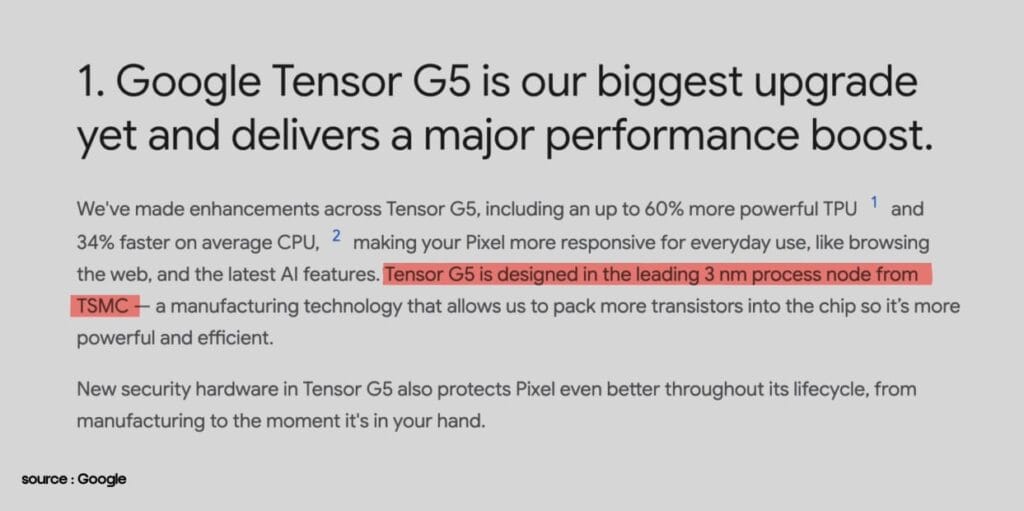
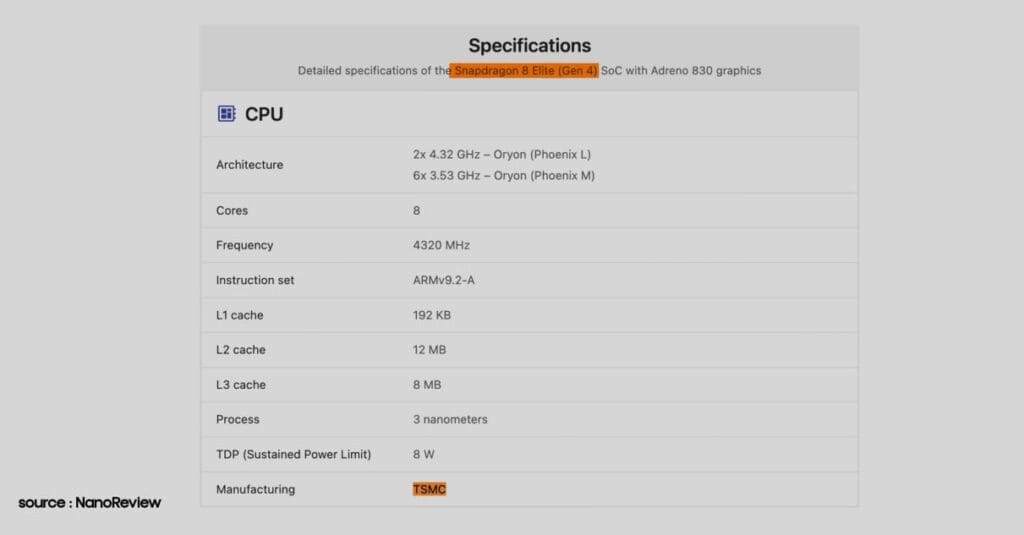
For years, the comparison between Google’s Pixel and Samsung’s Ultra has followed a familiar story: the Pixel, despite its strengths, often lags behind its competition. This year, however, Google aimed to change the narrative with the Pixel 10 Pro XL, featuring a new Tensor G5 processor designed by TSMC—the same company that makes Snapdragon’s efficient chips.
But did they succeed? We’re comparing the Pixel 10 Pro XL against the flagship Samsung Galaxy S25 Ultra to see if the gap has finally shrunk, or if it’s wider than ever.
Design, Durability, and In-Hand Feel
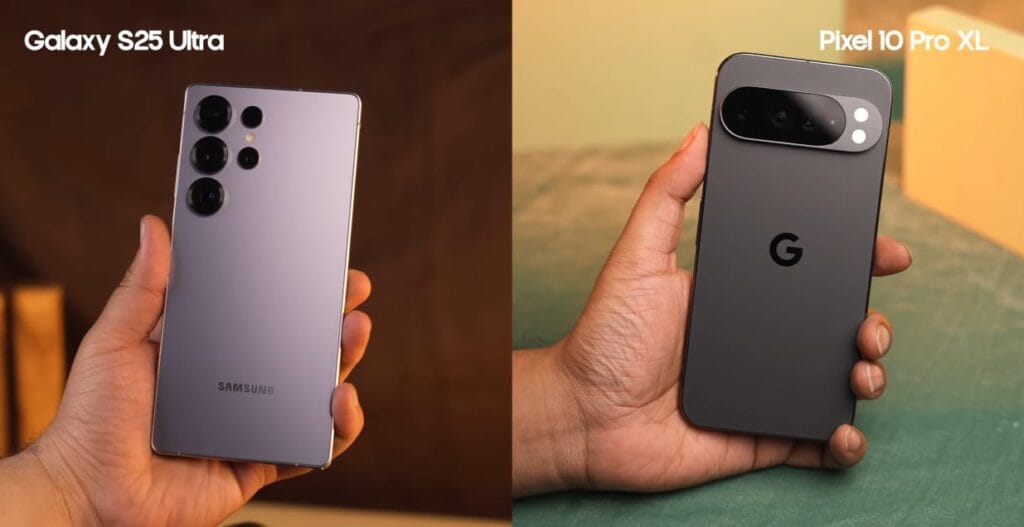
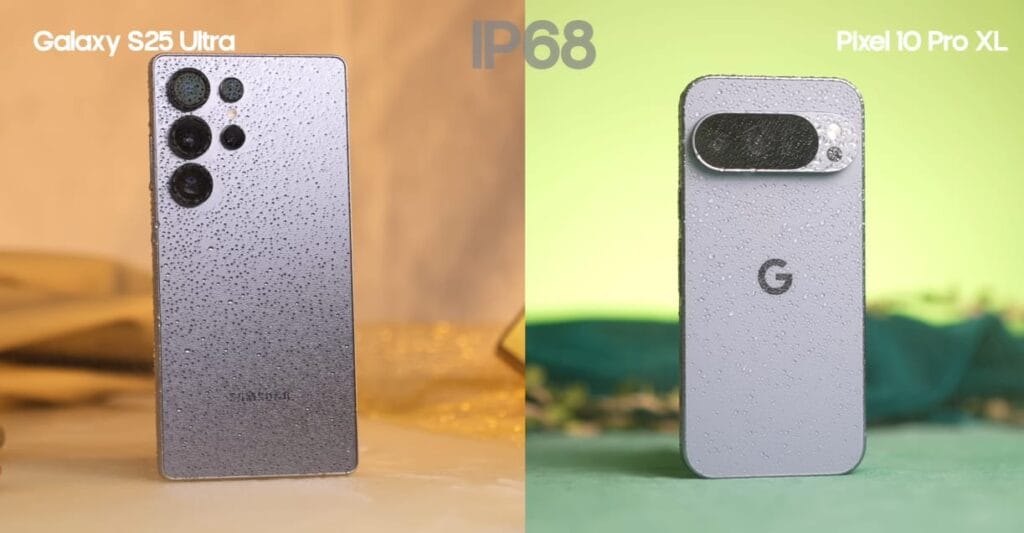
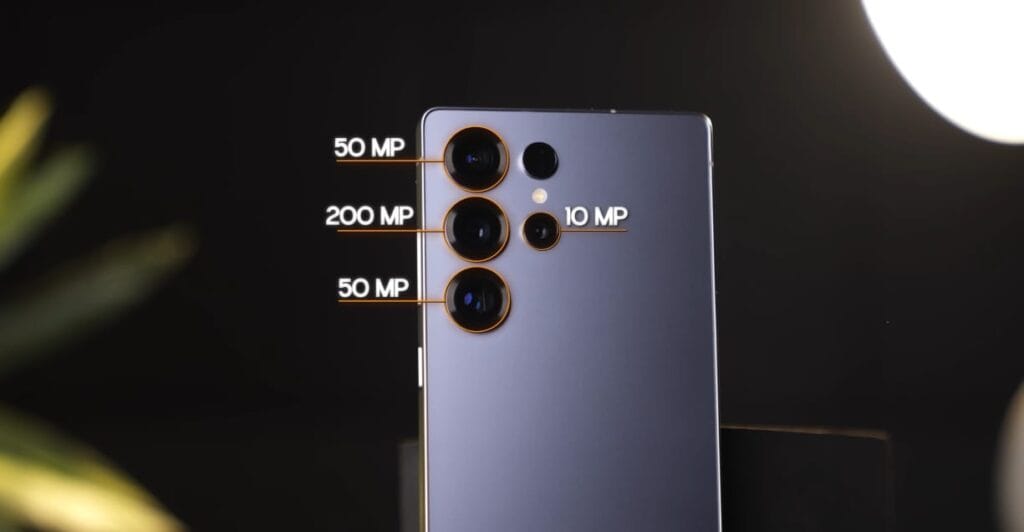
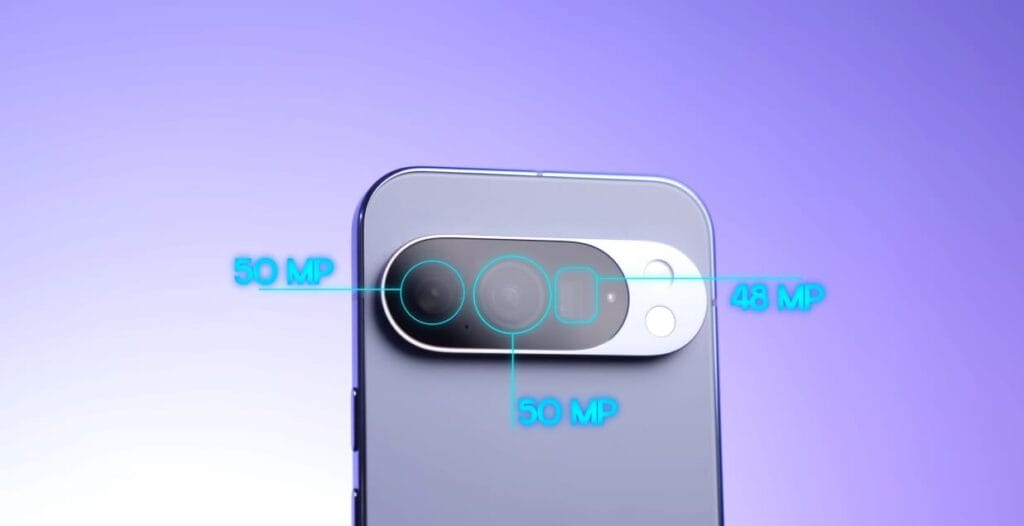
Both phones have established strong, unique design identities. The S25 Ultra is instantly recognisable with its five-camera array, while the Pixel 10 Pro XL sports its signature, massive camera visor
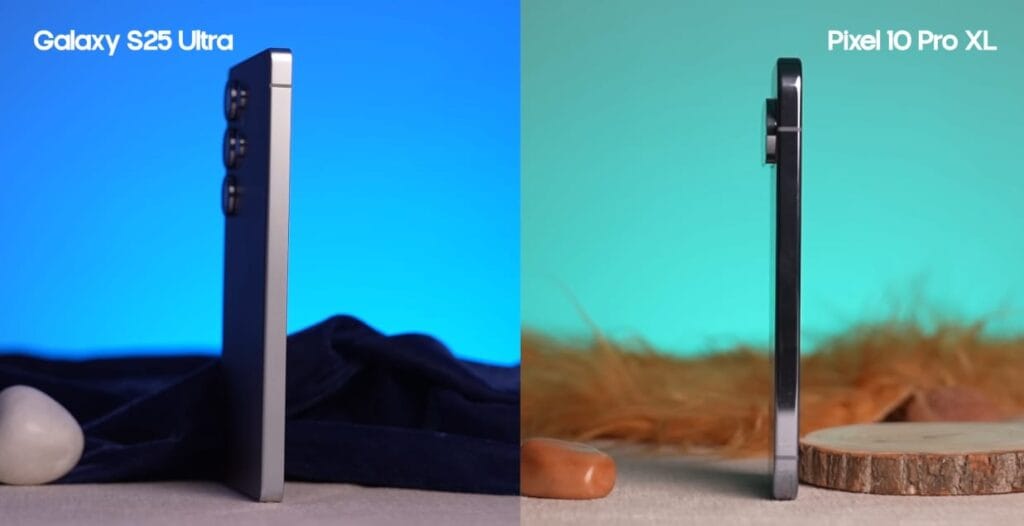
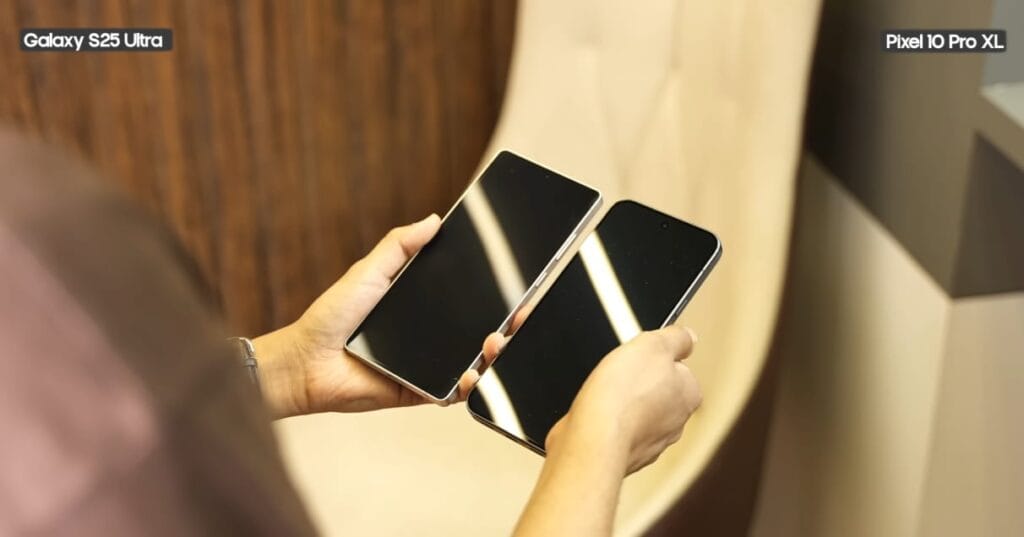
Feel: Both phones feature a flat frame7. However, the Pixel’s edges are much softer, making it feel “very smooth” to hold without a case8. The S25 Ultra’s sharp corners almost necessitate a case.
Durability: This is a clear win for Samsung. The S25 Ultra, launched in early 2025, shows only a few micro-scratches despite not using a screen guard. The Pixel 10 Pro XL, however, was covered in “a lot of micro-scratches” after just two months.
Audio & Haptics: Both have the same IP rating. Speakers are good on both, though the Pixel sounds “slightly better”. The Pixel also has “very good” haptic feedback.
Verdict: The Pixel feels better in the hand, but the S25 Ultra’s screen is significantly more durable.
Pixel 10 pro XL
★★★★★
Samsung S25 Ultra
★★★★★
The Display: Reflections vs Brightness Quirks
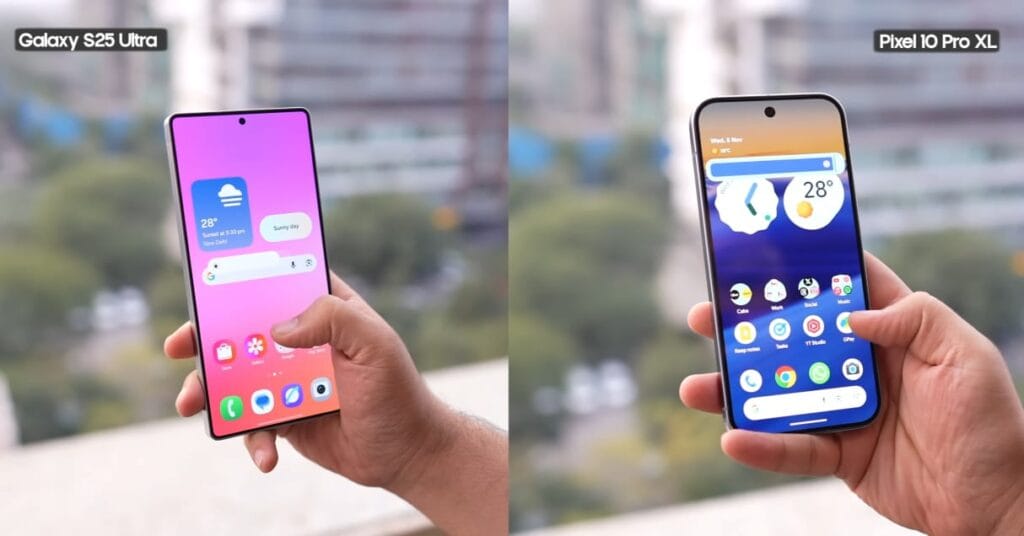
In a practical, direct sunlight test, both displays feel “equally bright”16. However, the viewing experience is completely different.
Samsung’s “very big advantage” is its anti-reflective coating. It cuts down so many reflections that it creates a “better viewing experience” by default. The only downside is that this coating gathers “a lot of smudges” over time.
When viewing content, Samsung is “slightly better” due to superior color tuning.
The Pixel, on the other hand, has a frustrating brightness curve.
At 50% brightness, the Samsung is brighter.
At 75% brightness, the Samsung is still brighter.
But between 75% and 100%, the Pixel’s brightness suddenly “becomes much brighter”.
This inconsistency forces the user to constantly adjust the brightness manually. To make matters worse, the auto-brightness on the Pixel “always feels like the brightness is low”, a problem that has persisted since the Pixel.
Verdict: Samsung’s anti-reflective screen provides a better practical viewing experience, while the Pixel’s brightness controls are inconsistent.
Pixel 10 Pro XL
★★★★★
Samsung S25 Ultra
★★★★★
Performance & Gaming: The Great Divide
This was Google’s chance to close the gap with the TSMC-made Tensor G5 processor. The question is, did it work?
The simple answer is: “no, it hasn’t”.
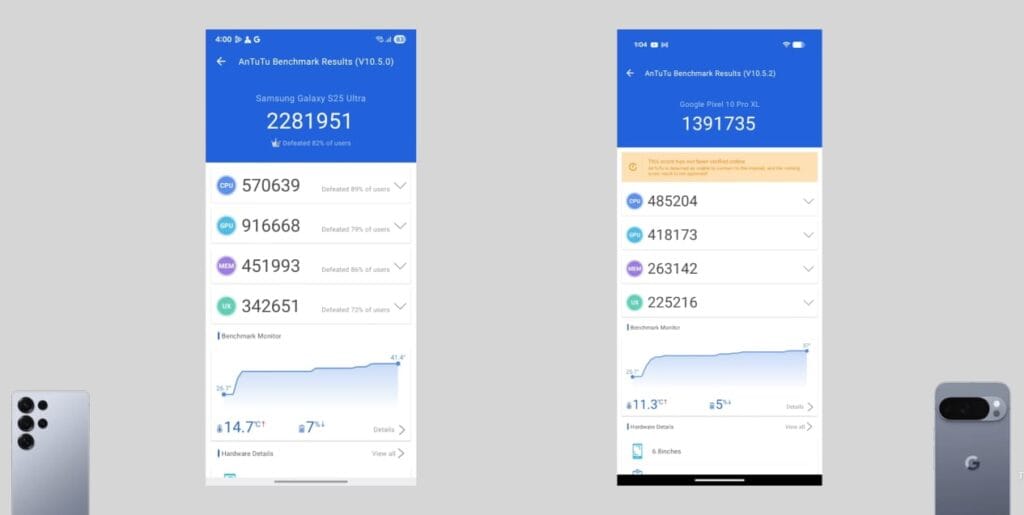
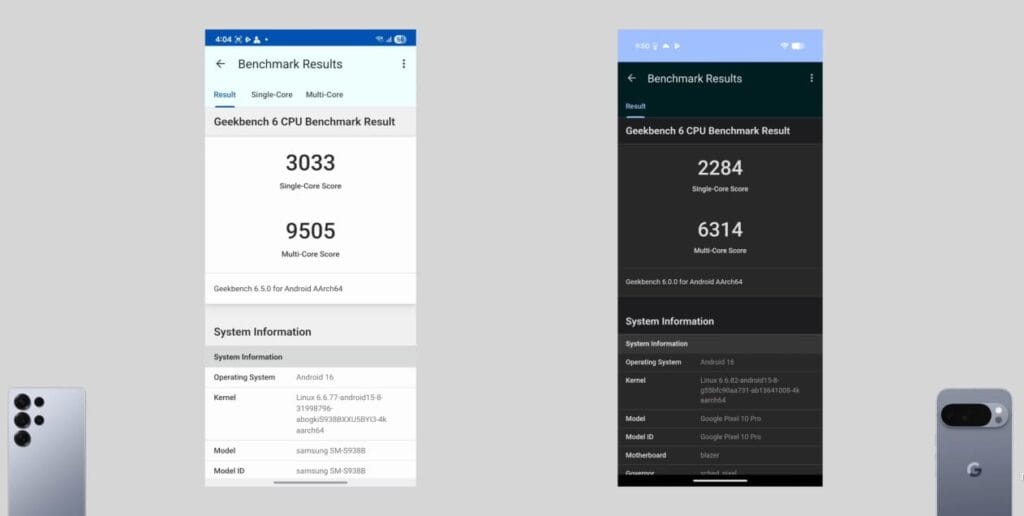
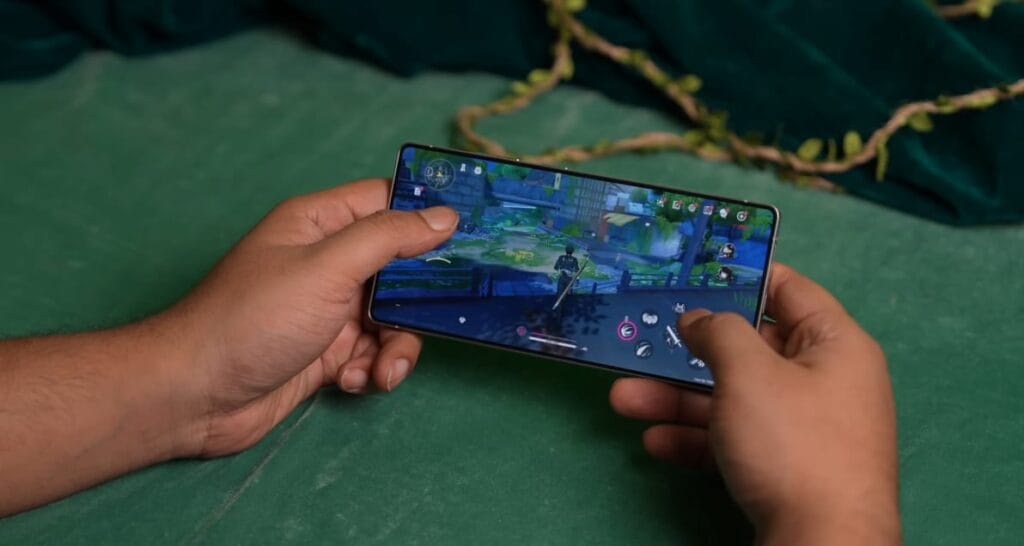
The performance gap between the Pixel’s Tensor G5 and the S25 Ultra’s Snapdragon 8 Gen 4 is “massive”. The AnTuTu-score difference is over 1 million, which is unacceptable for a phone in this price range.
This gap is just as clear in real-world gaming:
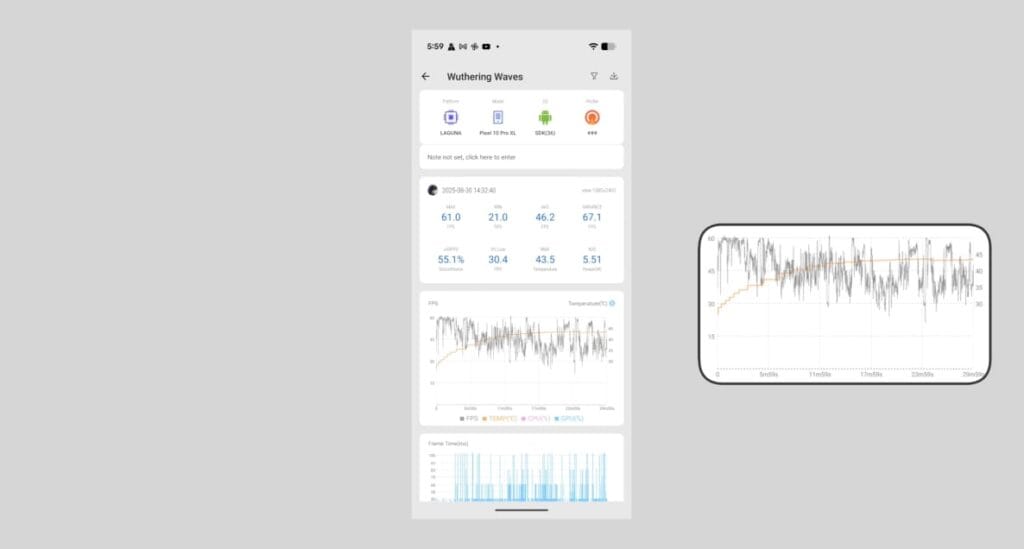
Pixel 10 Pro XL (Wuthering Waves): 46.2 average FPS.
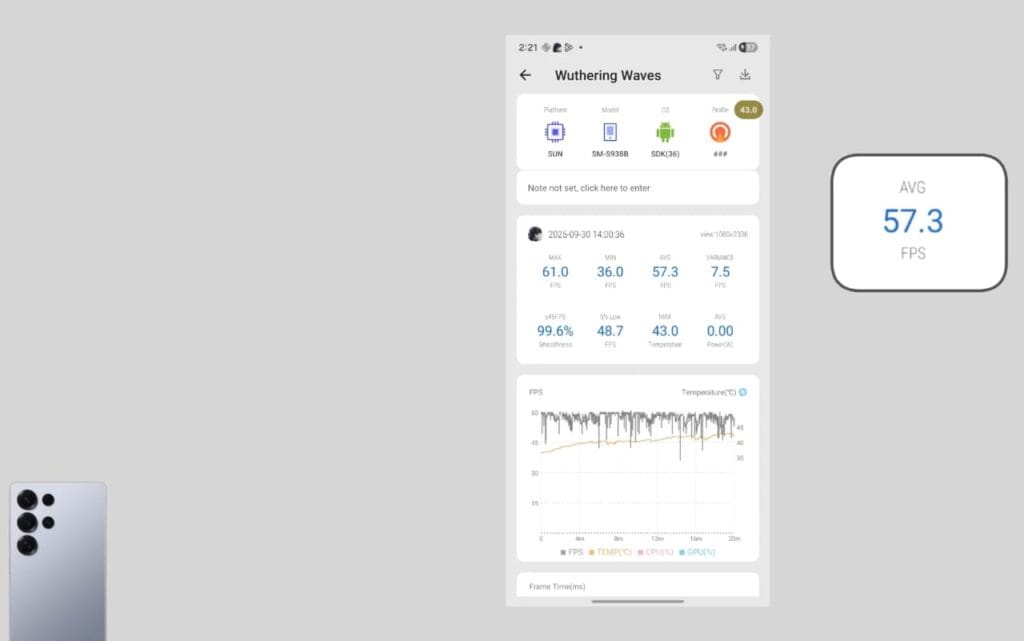
S25 Ultra (Wuthering Waves): 57.3 average FPS, even after 38 minutes of gameplay.
This is a “big difference”. Furthermore, despite the new chip, the Pixel still has “a lot of scope for improvement in heating”.
Verdict: The S25 Ultra is in a different league for performance and gaming. The gap has not closed.
Pixel 10 pro XL
★★★★★
Samsung S25 Ultra
★★★★★
Battery & Charging: A Much Closer Race
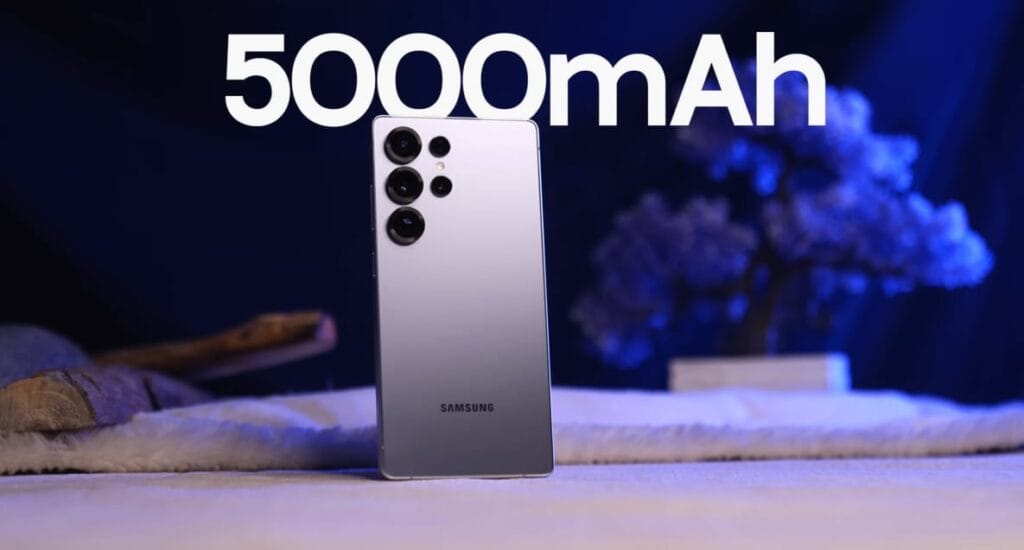
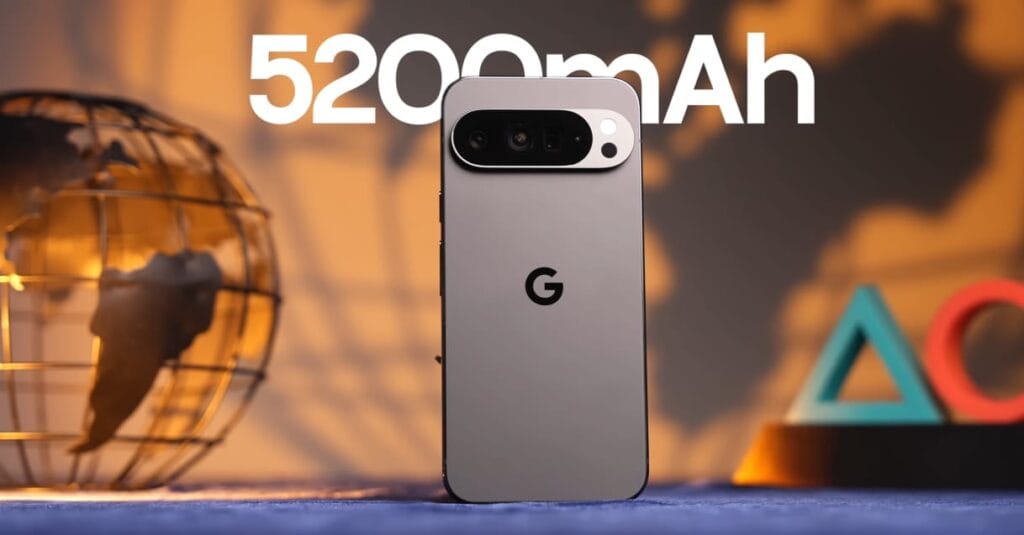
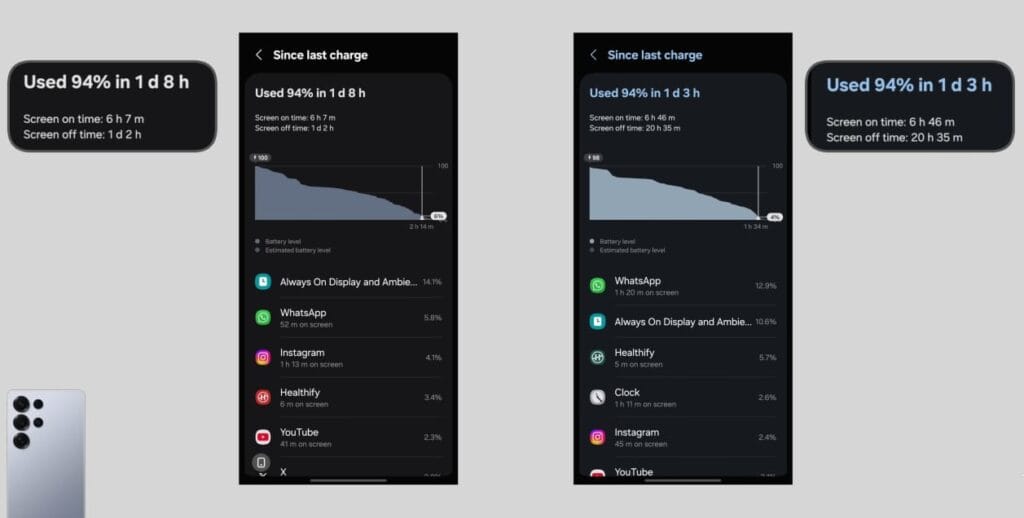
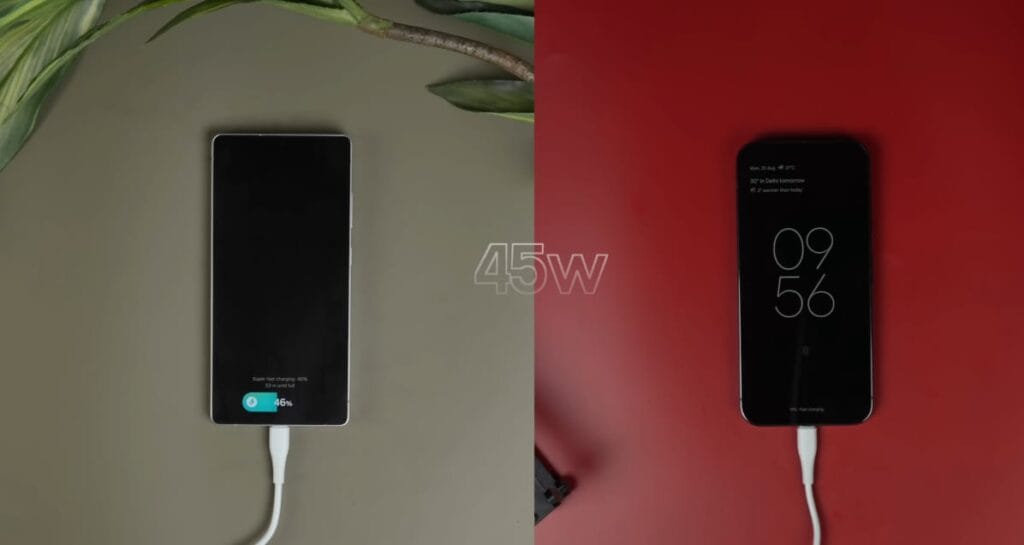
On paper, things are very even. The Pixel has a slightly larger 5200 mAh battery compared to Samsung’s 5000 mAh, and both support 45W wired charging.
Battery Life (Screen-On Time): The Pixel is “slightly better,” delivering 6.5 to 7.5 hours of screen-on time, versus 6 to 7 hours on the Samsung.
Wireless Charging: The Pixel is faster at 25W (vs. 15W on Samsung) and includes magnets. However, it requires a Qi 2.2 charger, which is hard to find in India.
Reverse Wireless Charging: Samsung still supports this; Google has removed it from the Pixel.
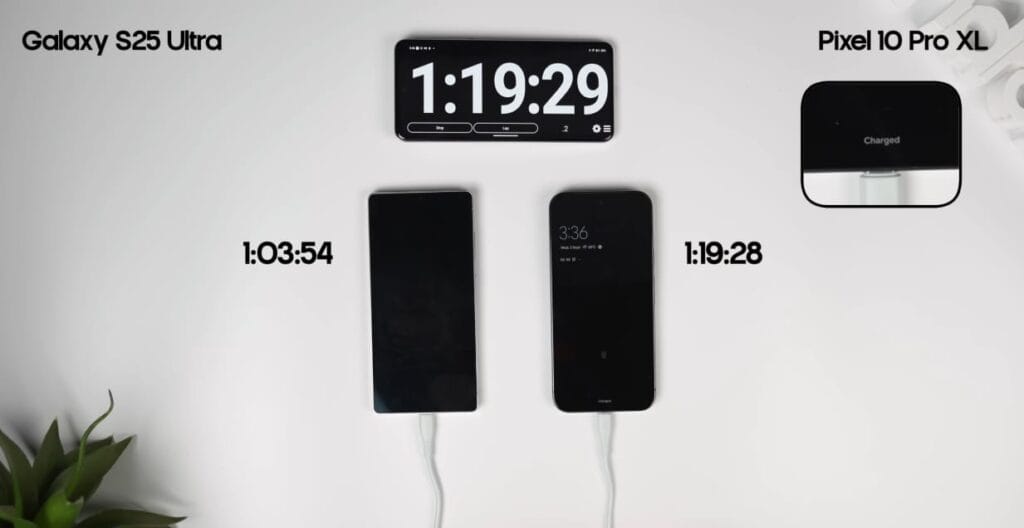
Wired Charging Speed Test:
Despite both having 45W charging, the S25 Ultra is faster.
Time
S25 Ultra (Charge)
Pixel 10 Pro XL (Charge)
30 min
64%
65%
45 min
90%
83%
1 hour
99%
94%
Full Charge
1 hour 4 min
1 hour 19 min 49 sec
Strangely, the Pixel took a “full 10 minutes” just to go from 99% to 100%.
Verdict: This department is very close. The Pixel has slightly better battery life, but the S25 Ultra charges faster and still has reverse wireless charging.
Pixel 10 pro XL
★★★★★
Samsung S25 Ultra
★★★★★
Software & AI: Features vs Availability
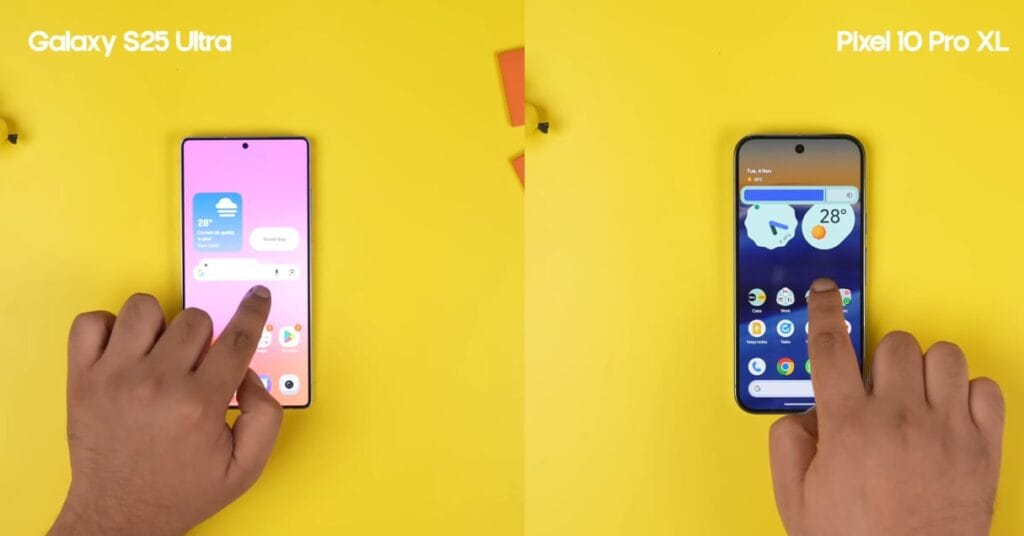
The Pixel traditionally has an “upper hand” in software experience, with its new Material 3 expressive UI feeling “really good”. However, in the AI race, availability is key.
Samsung has a “clear advantage” by making all its AI features available in India. Google, by contrast, has not enabled key features, such as Call Notes, in the region. Even the Pixel’s new “Magic Cue” feature hasn’t worked properly even once.
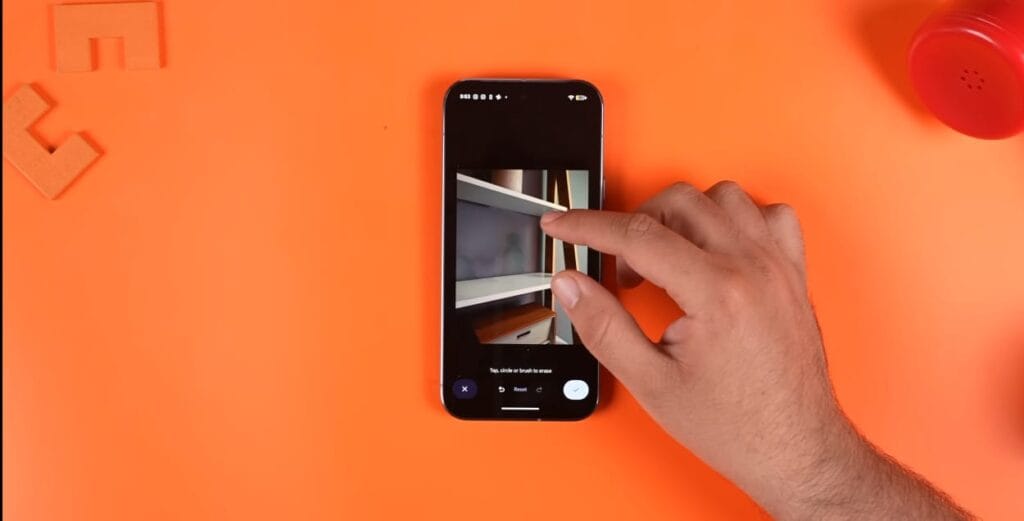
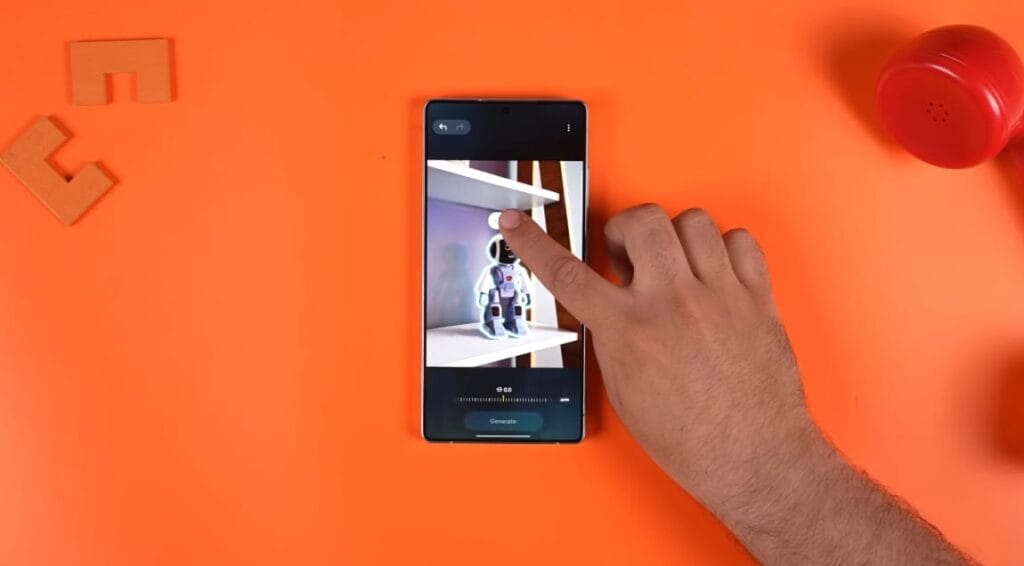
When it comes to AI photo editing:
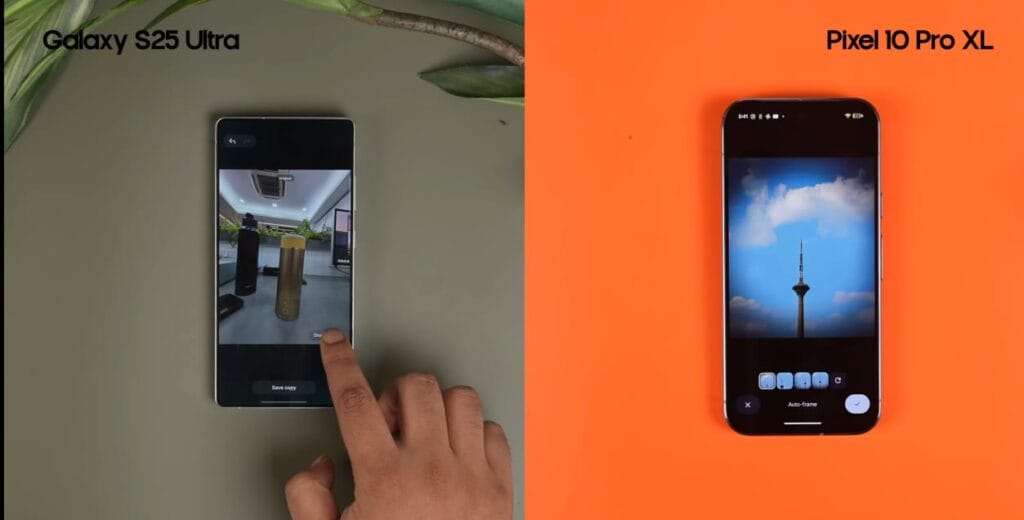
Pixel: Has a “slightly better” UI for AI edits. It does an “awesome” job changing skies and has a “really well” working auto-framing feature.
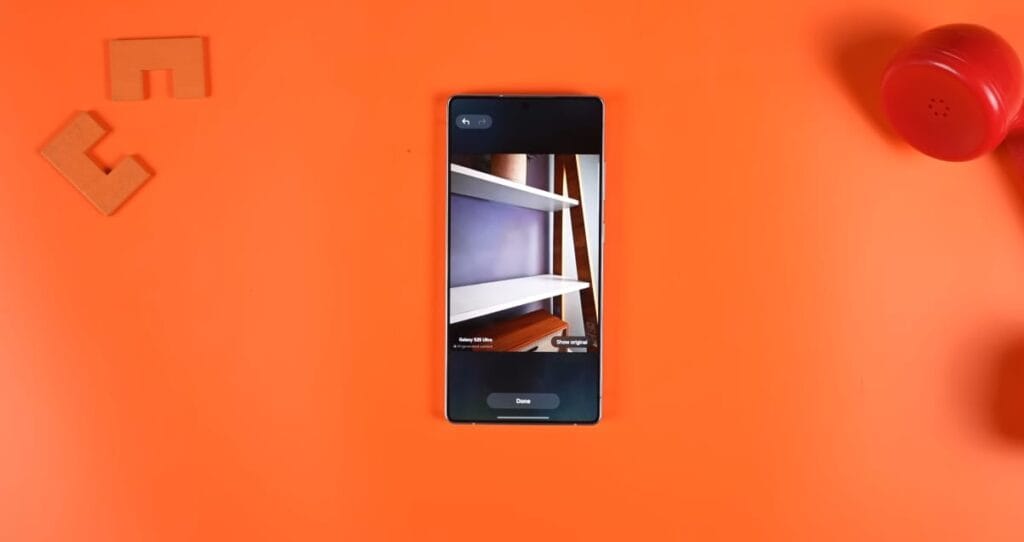
Samsung: Is “better” at removing subjects or changing their location. Its AI eraser is “so smart” that it automatically removes the object’s shadow, something the Pixel fails to do.
Both phones promise 7 years of updates, but the Pixel receives day-one updates.
Verdict: The Pixel’s UI feels great, but Samsung’s AI is more practical, more reliable, and—most importantly—more available.
Pixel 10 pro XL
★★★★★
Samsung S25 Ultra
★★★★★
Cameras: The Final Showdown
This is often Pixel’s strongest category, but the S25 Ultra makes it a tough fight.
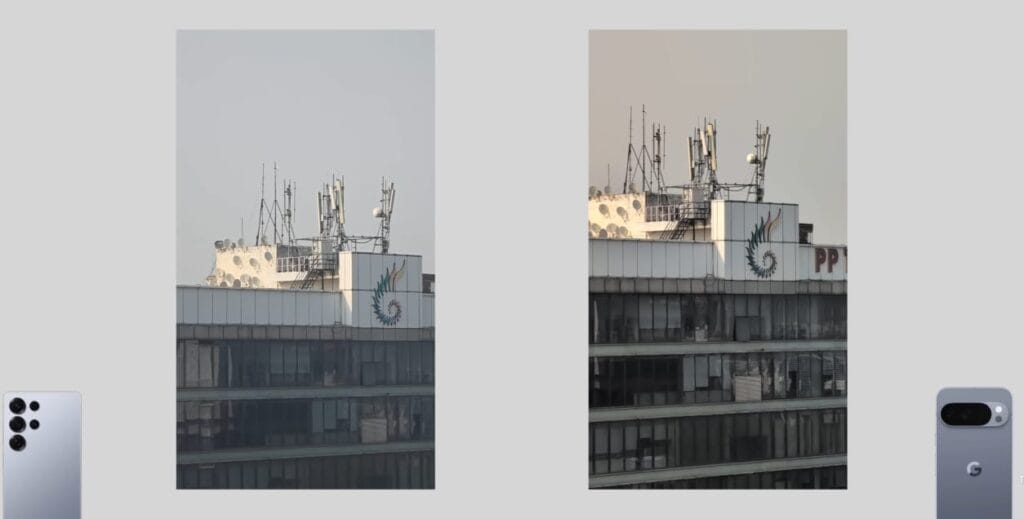
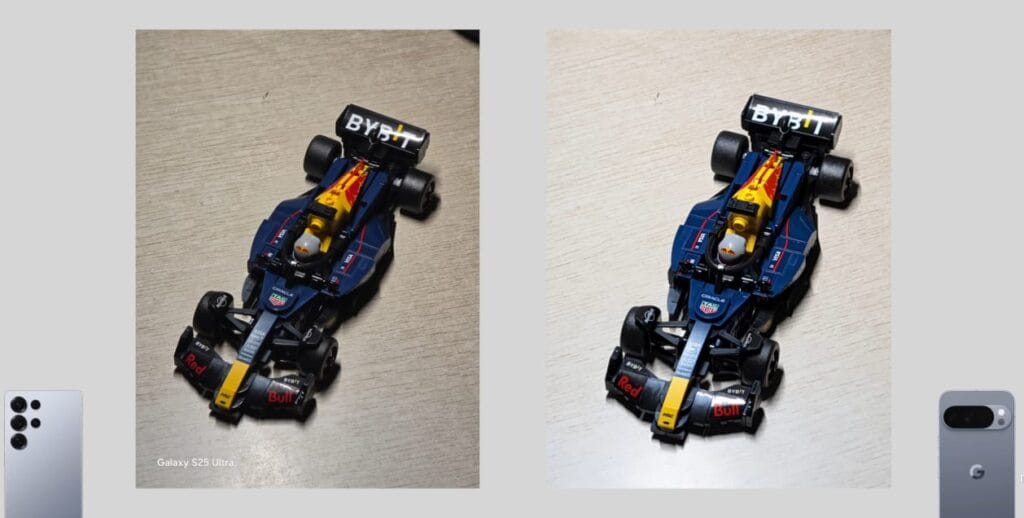
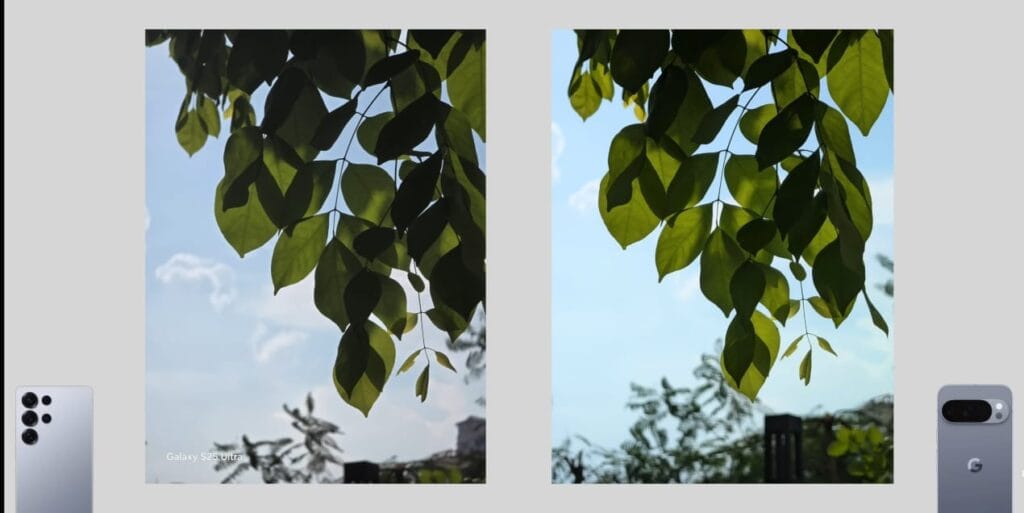
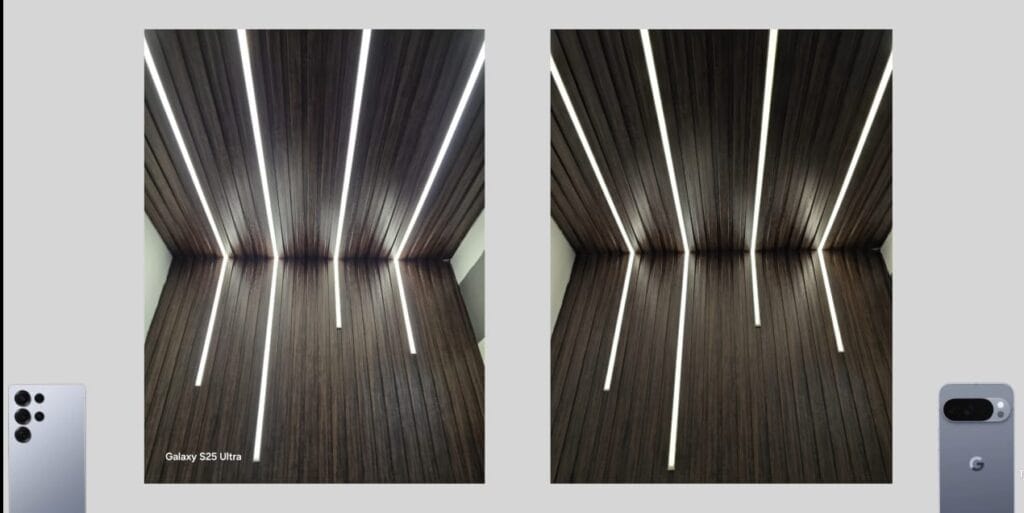
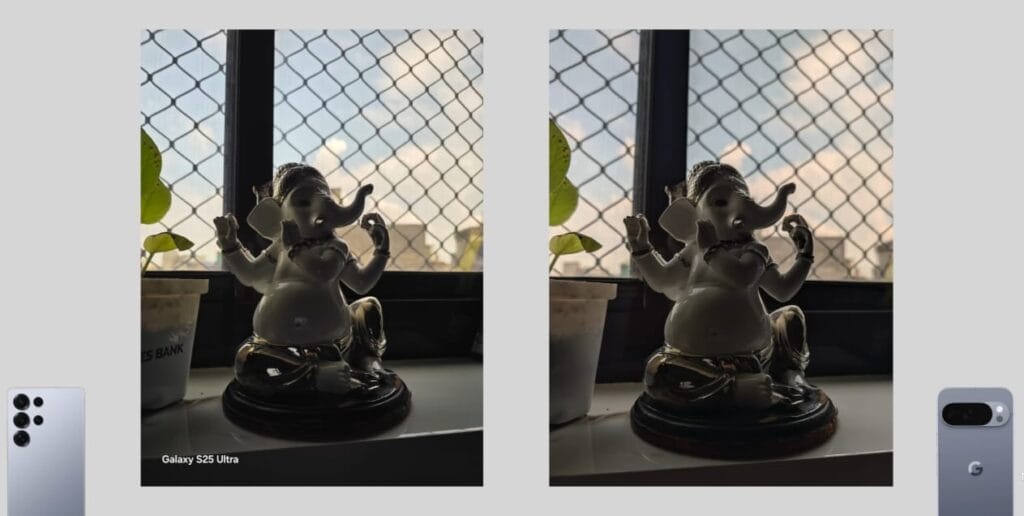
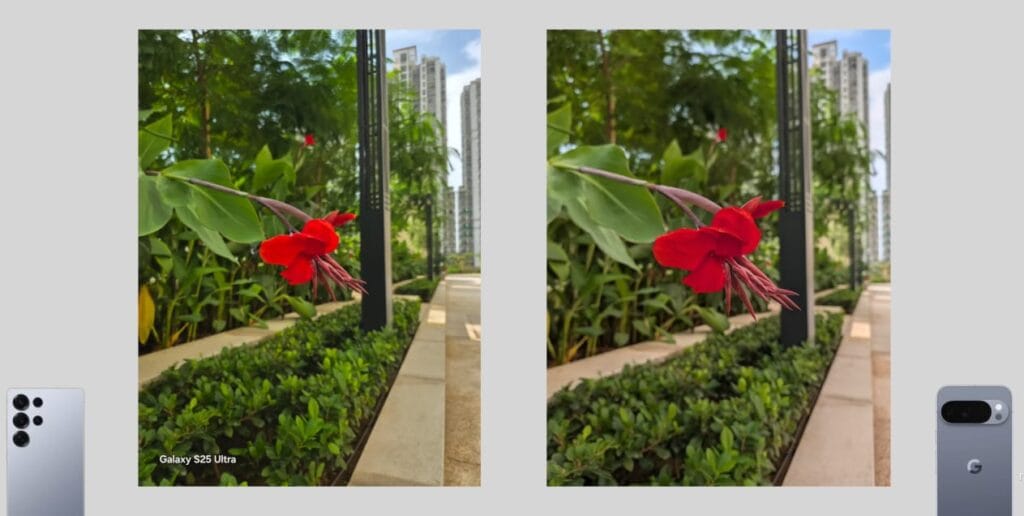
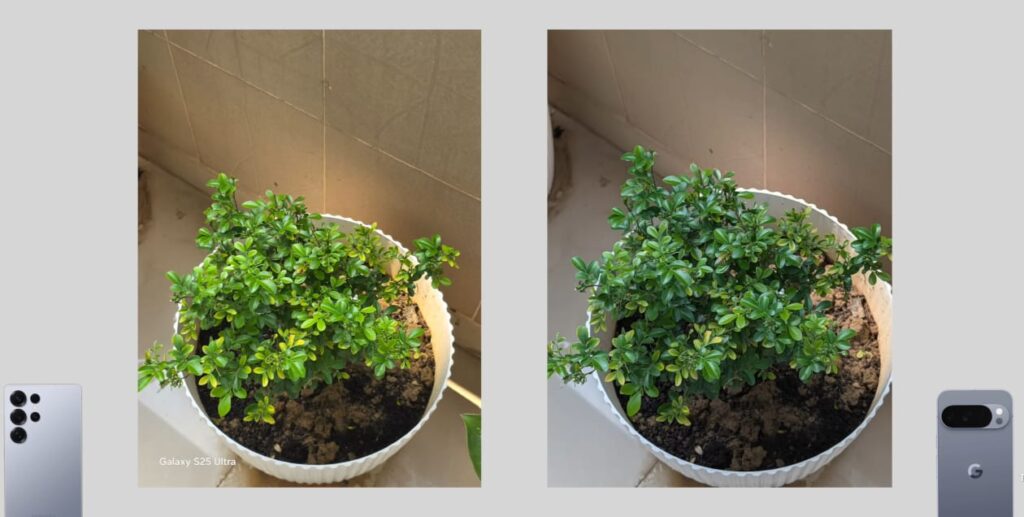
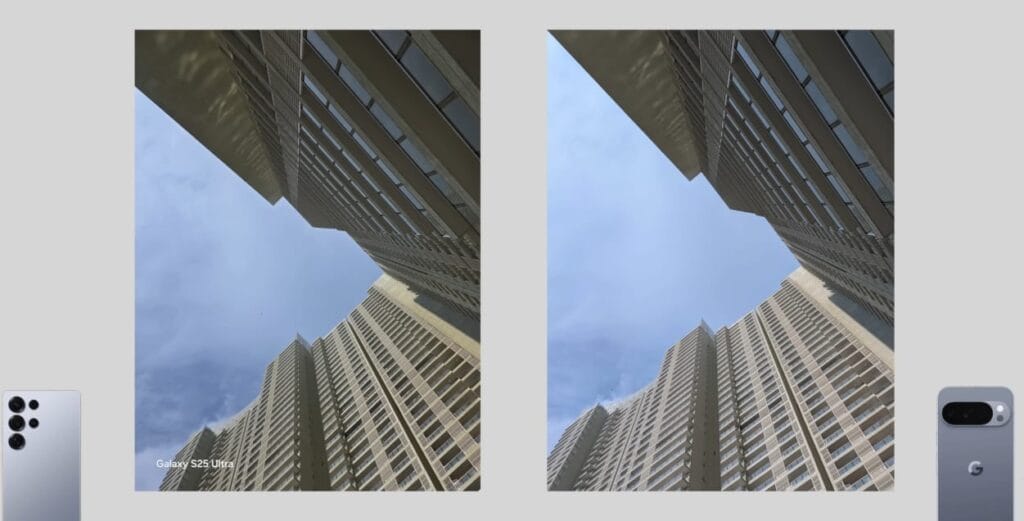
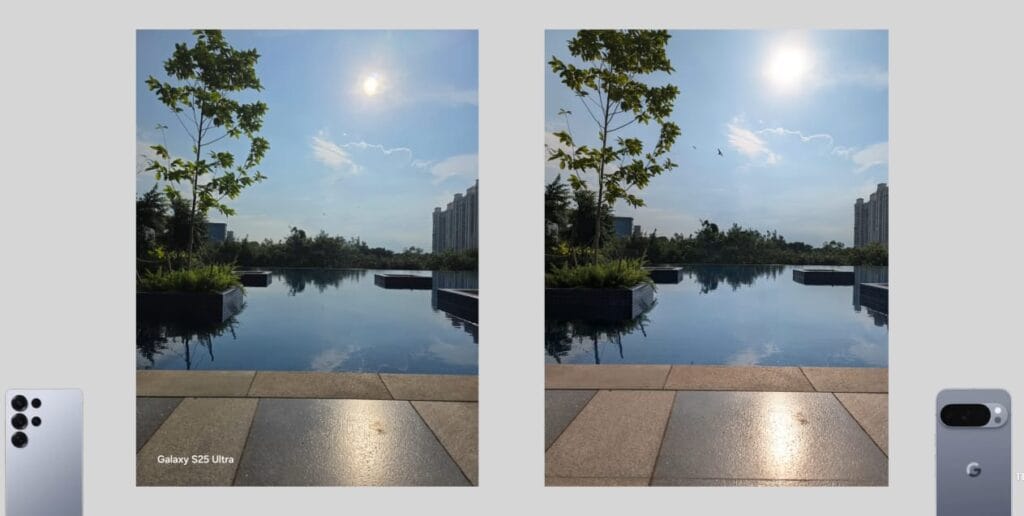
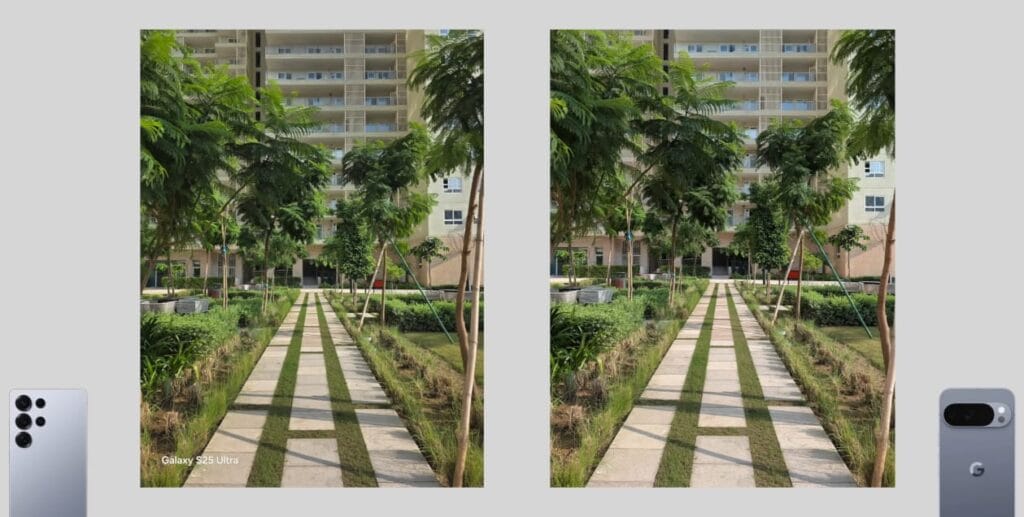
Main Camera: Samsung produces “very colourful” and “eye-catching” photos. The Pixel has “better HDR” and more “realistic colours”.
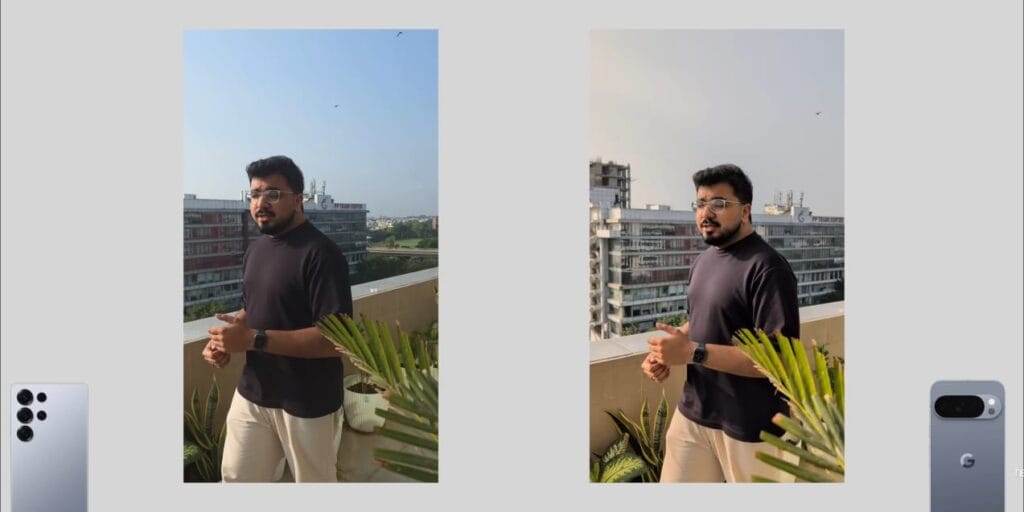
Portraits & People: This is a huge win for Samsung. Human shots are “much better” on the S25 Ultra, and its Portrait Mode is “far, far better”. The Pixel’s portrait mode “still needs improvements”, as it still can’t capture 5X portraits and adds “over-sharpening” to 2X portraits.
Selfies: Samsung’s are “more colorful and eye-catching”, while the Pixel has “stronger HDR“.
Video: This is an “easy win” for Samsung.
Pixel: Lens switching is “very jerky,” and it shows a “color shift” when lighting changes. It relies on a “Video Boost” feature where you must upload videos to the cloud for processing, which isn’t necessary on Samsung.
Samsung: Has good HDR, smooth lens switching, and “no color shift”.
Verdict: While the Pixel holds its own in standard photos, the S25 Ultra is far superior for portraits and provides a complete, hassle-free video experience.
So, has the gap between Samsung and Pixel closed this year?
While the Pixel 10 Pro XL has shown clear improvements in design and display, the answer in the most critical areas is a resounding no. In performance and camera capabilities—areas where expectations were highest—the gap between these two phones “has widened even more”.
Samsung showed “major improvements” this year, pushing itself even further ahead. To make the decision even clearer, the Pixel 10 Pro XL is currently “more expensive” than the S25 Ultra.
The decision this year is “obvious”.
f you’re curious about how the Oppo K13 Turbo performs beyond the specs, you’ll definitely want to read our complete Oppo K13 Turbo Review. We’ve covered everything from gaming performance and battery life to display quality and camera results.
Still not sure which one fits your needs? Visit our Smartphones section to explore more detailed reviews and comparisons. You can also check out our Laptops section if you’re planning to upgrade your daily work or gaming setup.