The ASUS ROG G1000 is one of the wildest gaming desktops ASUS has revealed in recent years. Designed for enthusiast gamers and high-end PC users, this giant full-size tower combines flagship hardware, aggressive cooling, and a futuristic design that immediately stands out from traditional gaming PCs.
At first glance, the Asus ROG G1000 looks more like a concept showcase than a regular desktop. ASUS clearly wanted to create a premium showcase system that delivers both top-tier gaming performance and a unique visual experience. The desktop features AMD Ryzen 9 9950X3D alongside NVIDIA GeForce RTX 5090 graphics, making it one of the most powerful consumer gaming systems currently available.
However, the biggest talking point is not just the hardware. ASUS has added a holographic-style display inside the side panel using spinning PCB panels with LED lighting. The effect creates animated visuals that look futuristic and completely different from normal RGB implementations found in gaming desktops today.
Futuristic Design That Immediately Stands Out
The first thing users will notice about the ASUS ROG G1000 is its massive size. This is not a compact gaming PC or a mid-tower desktop. ASUS built the G1000 as a full-size enthusiast chassis with a huge internal layout designed for maximum airflow and premium hardware support.
The large dimensions help the system accommodate oversized cooling components and high-power hardware while also improving airflow efficiency. In person, the desktop reportedly feels much larger than photos suggest.
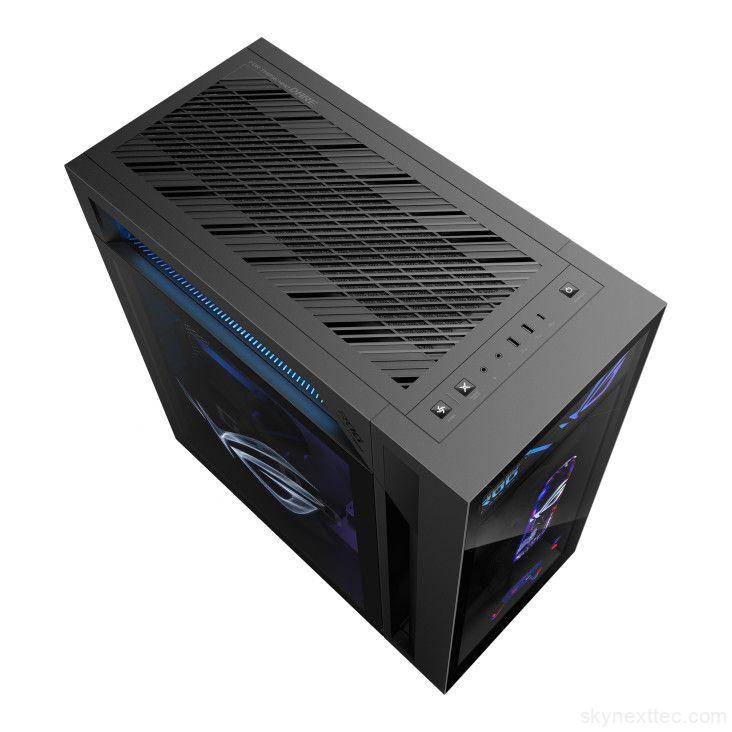
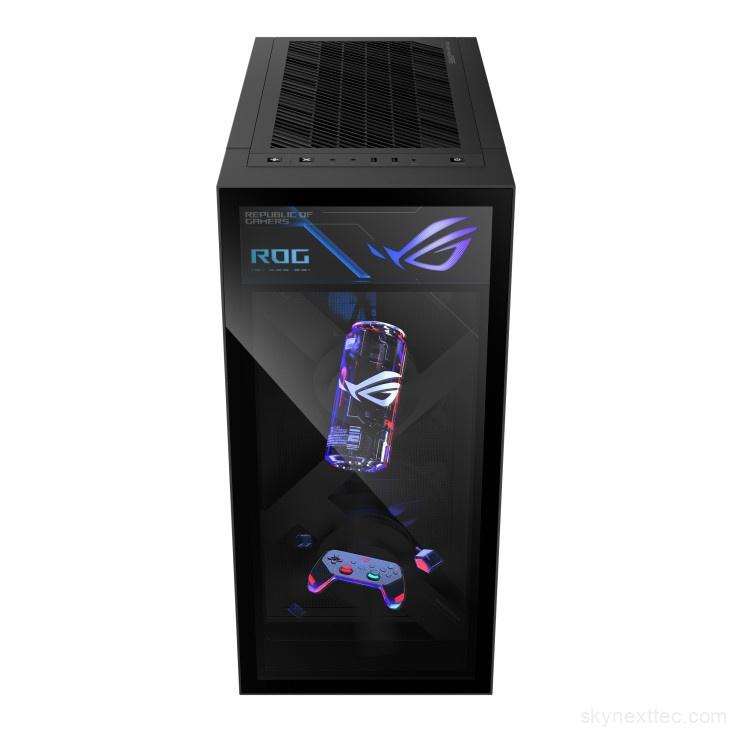
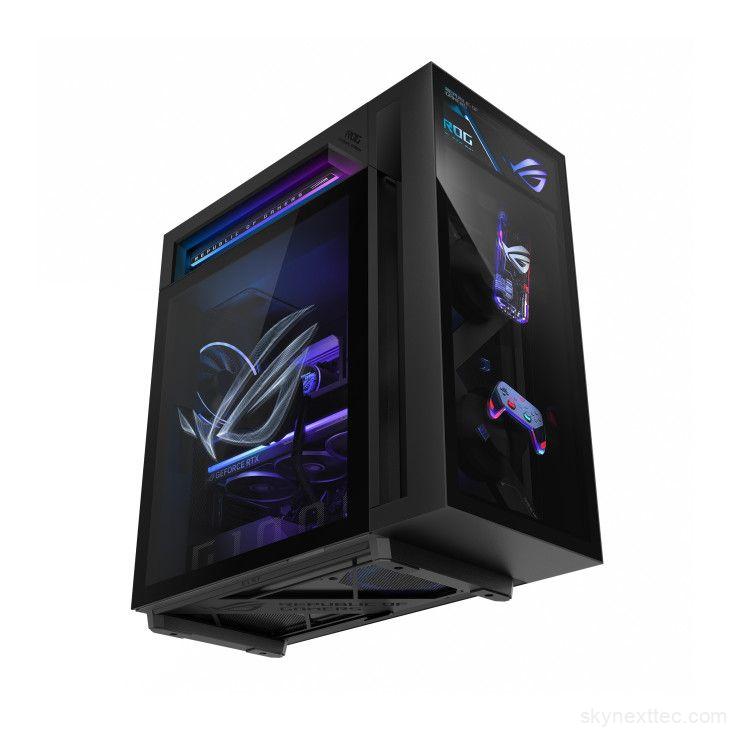
The real visual attraction is the holographic animation system mounted behind the side panel. ASUS uses spinning PCB modules fitted with LED bars that rotate at high speed to generate animated effects. Because the components are constantly spinning, the system can create motion-based lighting animations including fade effects, shrinking visuals, and moving patterns.
Unlike RGB fans that combine lighting with cooling functionality, these rotating elements are purely aesthetic. They do not contribute to airflow or thermal performance. Instead, they exist solely to create a futuristic showcase appearance that makes the desktop look incredibly unique.
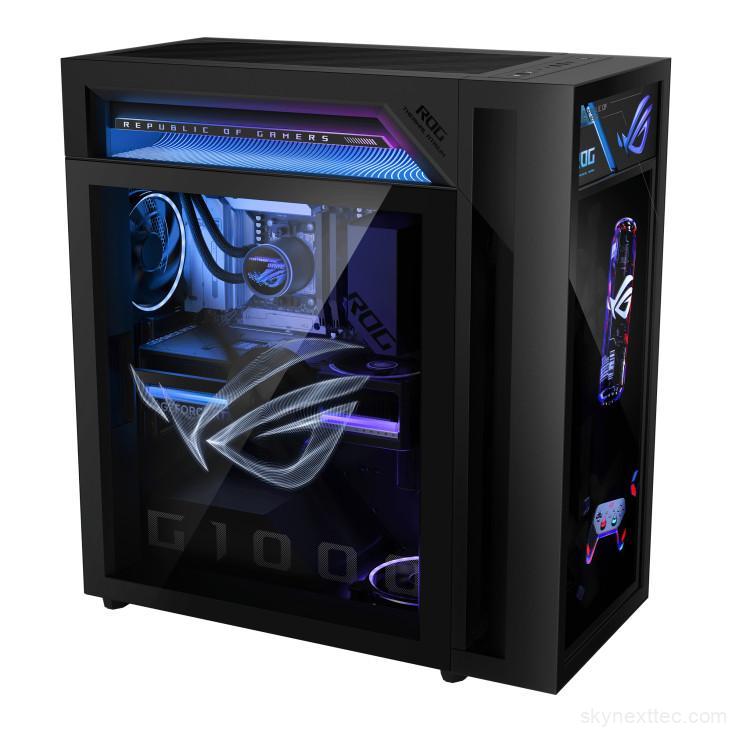
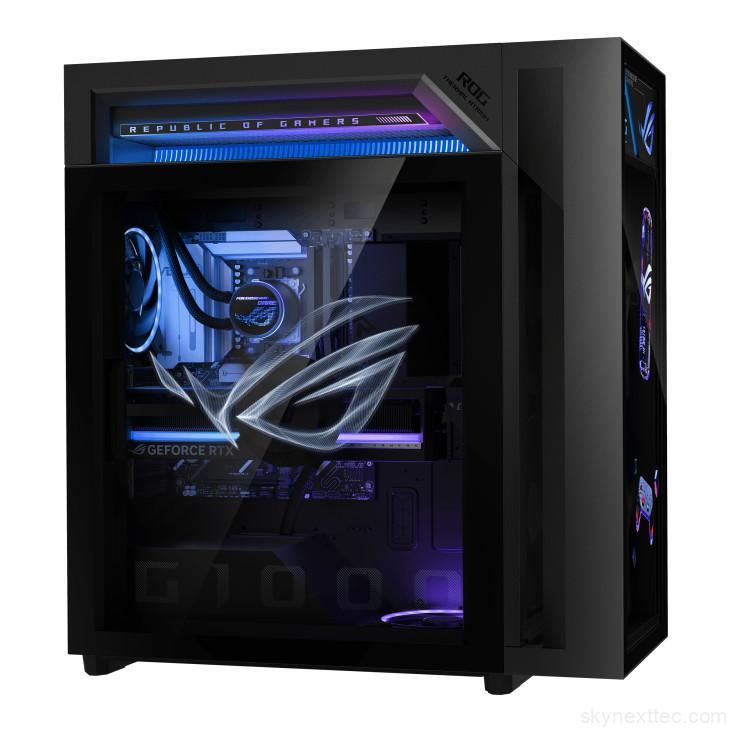
For gamers who enjoy premium RGB setups and custom PC aesthetics, the Asus ROG G1000 delivers one of the most eye-catching designs currently seen in a pre-built gaming desktop.
Flagship Hardware Built for Extreme Performance
ASUS is clearly targeting hardcore gamers, streamers, and content creators with the hardware configuration of the Asus ROG G1000.
Key Specifications
| Processor | AMD Ryzen 9 9950X3D |
|---|---|
| Graphics Card | NVIDIA GeForce RTX 5090 |
| Cooling System | 420mm All-in-One Liquid Cooler |
| Airflow Design | Tri-Zone Airflow Cooling |
| PSU Cooling | Dedicated PSU Cooling Chamber |
| Chassis Type | Large Full-Size Tower |
The Ryzen 9 9950X3D is expected to deliver elite gaming performance thanks to AMD’s advanced 3D V-Cache technology, while the RTX 5090 should dominate demanding 4K gaming workloads and ray tracing performance.
This combination places the ASUS ROG G1000 among the highest-end gaming desktops available for consumers.
Advanced Cooling System
One of the biggest challenges with powerful gaming desktops is heat management. High-end CPUs and GPUs consume large amounts of power, especially during gaming, rendering, or AI workloads.
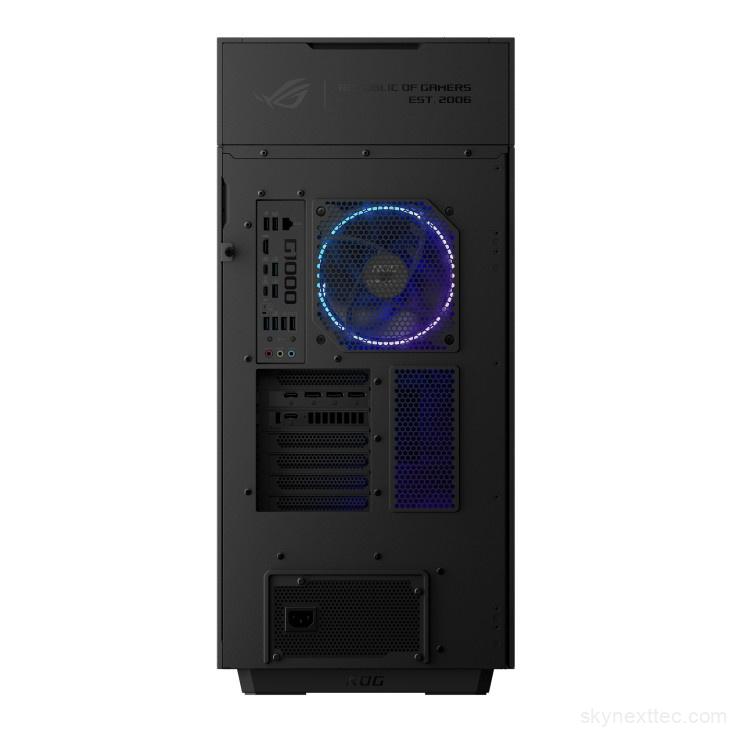
ASUS appears to have focused heavily on thermal performance inside the Asus ROG G1000. The company uses what it calls a “tri-zone airflow” system that separates airflow paths for different internal components.
Cooling Features
- Massive 420mm radiator support
- Independent PSU airflow chamber
- Dedicated cooling zones for CPU and GPU
- Large airflow-focused chassis design
- Improved thermal separation between components
The inclusion of a 420mm liquid cooler is especially impressive because many gaming cases cannot even support radiators of this size. Larger radiators generally allow lower temperatures and quieter fan operation compared to smaller cooling systems.
During demonstrations, ASUS reportedly showed noticeable airflow movement through the chassis, highlighting how much attention was given to cooling efficiency.
For enthusiast gamers, this matters a lot because lower temperatures help maintain stable boost clocks, improve long-term performance consistency, and reduce thermal throttling during heavy gaming sessions.
Expected Gaming Performance
Although full benchmark testing is not yet available, the hardware inside the ASUS ROG G1000 suggests extremely high performance across gaming and productivity workloads.
The RTX 5090 combined with Ryzen 9 9950X3D should comfortably handle:
- 4K ultra gaming
- High-refresh-rate esports gaming
- Ray tracing workloads
- AI-assisted rendering
- Video editing and 3D creation
- Heavy multitasking and streaming
Modern AAA games should easily run at high frame rates with maximum visual settings enabled. Competitive gamers targeting high-refresh-rate monitors will also benefit from the powerful CPU and GPU combination.
For creators, the desktop should provide excellent performance in video rendering, animation, streaming, and professional workloads requiring significant GPU acceleration.
Pros
- Extremely powerful flagship hardware
- Unique holographic lighting system
- Excellent airflow-focused cooling design
- Massive 420mm liquid cooler
- Premium enthusiast-grade build quality
- Strong 4K gaming potential
Cons
- Extremely large chassis size
- Expected premium pricing
- High power consumption likely
- Holographic system is cosmetic only
- May be excessive for casual gamers
ASUS ROG G1000 vs Other High-End Gaming PCs
If you’re considering the ASUS ROG G1000, these are some of the closest premium alternatives in the ultra high-end gaming desktop market.
| Model | Best For | Main Highlights | Weakness |
|---|---|---|---|
| Alienware Area-51 Gaming Desktop | Premium Gamers | Excellent airflow, quieter operation, strong RTX 5090 configurations | Less unique design |
| MSI MEG Vision X AI 2NVZ9-045US | AI Creators & Streamers | Built-in front display, compact premium design | Smaller cooling capacity |
| HP OMEN Max Gaming Desktop | Balanced Gaming Setup | Cleaner minimal design, strong thermals | Less aggressive aesthetics |
| RTX 5090 Ultra Prebuilt 4K Gaming PC | Pure Gaming Performance | RTX 5090-focused 4K gaming power | Generic chassis design |
| ASUS ROG G1000 | Enthusiast Showcase Build | Holographic lighting, 420mm cooling, futuristic design | Massive chassis size |
Why the ASUS ROG G1000 Stands Out?
The ROG G1000 focuses heavily on being a showcase gaming desktop rather than just another powerful prebuilt PC. Most competitors prioritize compactness or minimalism, while ASUS pushes aggressive aesthetics and extreme cooling.
Key advantages include:
- Massive 420mm liquid cooling
- Unique holographic side-panel system
- Large airflow-focused chassis
- Expected elite thermals for RTX 5090 hardware
- Premium enthusiast design
Meanwhile, systems like the Alienware Area-51 Gaming Desktop focus more on quieter operation and cleaner industrial styling.
The MSI MEG Vision X AI 2NVZ9-045US Gaming Desktop targets creators with AI-focused features and a more compact premium build, while HP OMEN systems usually appeal to users wanting simpler aesthetics.
Which One Should You Buy?
Choose the ASUS ROG G1000 if:
- You want a futuristic showcase gaming PC
- RGB aesthetics matter to you
- You need maximum cooling potential
- You want one of the most visually unique gaming desktops available
Choose Alienware Area-51 if:
- You prefer quieter operation
- You want a cleaner premium design
- You care more about airflow refinement than RGB visuals
Choose MSI MEG Vision X AI if:
- You want a compact flagship desktop
- You are focused on AI workloads and creator features
- You like integrated display functionality
Community Feedback on RTX 5090 Systems
Many enthusiast users building RTX 5090 + Ryzen 9 systems are heavily prioritizing:
- airflow
- cooling efficiency
- lower noise
- large chassis support
Reddit users discussing RTX 5090 builds repeatedly mention that these systems generate significant heat and benefit from oversized airflow-focused cases and large liquid coolers.
That makes ASUS’s oversized cooling-focused approach with the ASus ROG G1000 especially interesting for hardcore gamers and creators using flagship hardware long-term.
Final Verdict
The ASUS ROG G1000 looks like a serious showcase gaming desktop built for hardcore enthusiasts who want both extreme performance and a futuristic gaming setup.
ASUS combines flagship Ryzen and RTX hardware with one of the most unique chassis designs currently available in the gaming desktop market. The advanced cooling setup, enormous full-size tower, and holographic side-panel system help the G1000 stand out from typical pre-built gaming PCs.
For users looking for maximum gaming power, premium aesthetics, and cutting-edge hardware, the ASUS ROG G1000 could become one of the most exciting enthusiast desktops of 2026. However, its massive size and likely expensive pricing mean it will mainly appeal to dedicated PC gamers and power users who want a true high-end showcase machine.